Must See Places and Best Things to Do in Mali
Mali is a country that resonates with the rhythm of its history, a place where ancient empires rose and fell along the life-giving Niger River. Its heart beats in the vibrant markets, the soulful melodies of its world-renowned musicians, and the incredible warmth of its people. Venturing here in 2026 is an invitation to explore a culture steeped in tradition, art, and unforgettable landscapes. From the bustling capital to serene riverside towns, Mali offers a journey that truly captivates the soul.
Bamako: The Rhythmic Heartbeat
As the sprawling capital of Mali, Bamako is a city of compelling contrasts. It's a vibrant, energetic hub where modern life buzzes alongside deep-rooted traditions. Set on the banks of the Niger, it's a fantastic introduction to the country's dynamic culture, renowned music scene, and friendly spirit.
Best foodie finds
Bamako’s culinary scene is a delight. For an authentic experience, head to a local eatery for a plate of Tiguadèguèna, a rich and savoury peanut butter stew often served with chicken or beef over rice. Another must-try is Fakoye, a dark leafy sauce made from jute leaves, packed with flavour and typically served with lamb. For a truly local vibe, find a street-side vendor grilling brochettes (meat skewers) in the evening – the aroma alone is irresistible.
Getting around
The city is best navigated by taxi. The green taxis are the most common; always agree on a fare before you start your journey. For shorter distances, hopping in a sotrama (a shared minibus) is a quintessential Bamako experience, offering a lively and budget-friendly way to see the city like a local.
Ségou: The City of Balanzan Trees
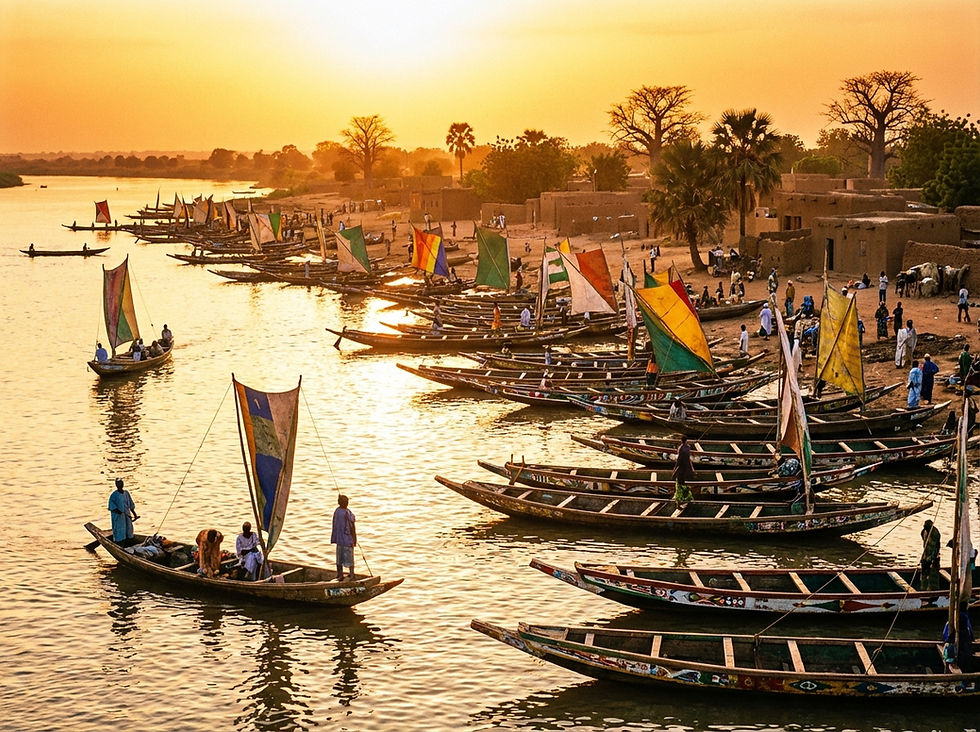
A few hours' drive from the capital, Ségou feels like a world away. This former colonial administrative centre is known for its beautiful Sudanese-style architecture, wide, leafy avenues lined with Balanzan trees, and a tranquil atmosphere. The city’s identity is intrinsically linked to the Niger River, which provides a stunning backdrop for daily life and creative inspiration.

Culture & landmarks
Ségou is a hub for Malian art and culture. Spend an afternoon wandering through the potters' village of Kalabougou (across the river), where you can watch artisans create incredible works using traditional methods passed down through generations. The city also hosts the famous Festival sur le Niger (check dates for 2026), a celebration of music and art that draws talent from across Africa. A simple sunset stroll along the riverbank is a peaceful and essential Ségou experience.
What to eat
River fish is the star of the show in Ségou. Look for capitaine (Nile perch), often grilled to perfection with local spices and served with a side of rice and fresh vegetables. You'll also find excellent riz au gras, a West African take on Jollof rice, cooked in a flavourful tomato-based sauce.
Sikasso: The Green Oasis
In the southern corner of Mali lies Sikasso, the country’s second-largest city and a vital agricultural heartland. Known for its lush greenery, fruit and vegetable production, it offers a different perspective on Mali's diverse landscape. The city is also rich in history, being the former capital of the Kénédougou Kingdom.

Street food + must-do experiences
Sikasso’s market is a feast for the senses, overflowing with fresh mangoes, bananas, and yams. Be sure to try some of the local street food, like fried yam or plantain chips. A key historical site is the legendary Tata of Sikasso, a massive earthen wall built in the 19th century to protect the city. Exploring its remains offers a tangible link to the region's proud history. For a moment of natural beauty, visit the Farako Waterfalls just outside the city.
Cultural Etiquette and Smart Travel Tips
Malians are known for their hospitality and warmth. Greetings are extremely important; taking the time to say hello (*"I ni ce"*) and ask how someone is doing before launching into a question is highly valued. Dress modestly, with shoulders and knees covered, especially when visiting smaller towns or religious sites. Always ask for permission before taking someone's photograph.
What to Pack
Pack light, breathable clothing made from cotton or linen. Long sleeves and trousers are ideal for sun protection and cultural modesty. A wide-brimmed hat, sunglasses, and strong sunscreen are non-negotiable. Comfortable walking shoes are a must for exploring markets and historical sites. Also include a basic first-aid kit and any personal medications.
Staying Connected
Staying connected while you explore is easier than ever. Instead of worrying about the bill shock that can come with international roaming from your Aussie provider, consider an E.Tel Travel eSIM. You can get it set up on your phone before you even leave home, giving you access to affordable data as soon as you land in Mali. It's a simple, smart way to share photos, navigate with maps, and stay in touch without breaking the bank. Find out more at https://apply.etel.com.au/travelesim/mali.
Final Thoughts
Mali is a destination that rewards the curious traveller with rich cultural encounters, mesmerising music, and profound history. By embracing its vibrant cities and warm hospitality, you're not just visiting a place—you're experiencing a living, breathing culture that will stay with you long after you return home.


